



What Is the Difference Between Inorganic Waterproofing and Traditional Flexible Cement?
What Is the Difference Between Inorganic Waterproofing and Traditional Flexible Cement?
A Long-Lasting Solution That Addresses Water Leakage at Its Root
Water leakage from exterior walls, roof seepage, and damp basements often lead people to patch the surface first. However, most recurring leakage problems are not caused by the crack alone. The real issue is often the aging of the waterproofing layer and the continued penetration of water into the concrete structure. If the material only remains on the surface, years of sunlight, rain, and thermal expansion and contraction can still cause it to fail again. To truly reduce the chance of repeated leakage repairs, the key is to distinguish whether you are doing surface-level leak stopping or structural waterproofing. This article uses the most common leakage situations encountered by consumers to help you clearly understand the difference between inorganic waterproofing and flexible cement.
Quick Key Takeaways: How to Choose a Long-Term Waterproofing Strategy
- The main cause of most leakage problems comes from material aging and the capillary penetration of the structure. If only surface repairs are done, moisture can still enter the concrete.
- Advantage of flexible cement: It is a surface coating-type waterproofing material. An organic latex forms an elastic membrane, but long-term exposure to sunlight can cause embrittlement and cracking. Its service life is usually around 3 to 5 years.
- Inorganic waterproofing materials are penetration-crystallization waterproofing systems. They form insoluble crystals that bond with the structure and can resist negative water pressure.
- Flexible cement is a consumable waterproofing system that depends on the integrity of its coating film. Inorganic waterproofing is a structural waterproofing system that focuses on substrate densification.
- From a long-term cost perspective, repeated labor and scaffolding costs for renovation are far higher than a one-time structural improvement.
What Is the Difference Between Inorganic Waterproofing and Traditional Flexible Cement?
A Long-Lasting Solution That Thoroughly Solves Leakage Pain Points
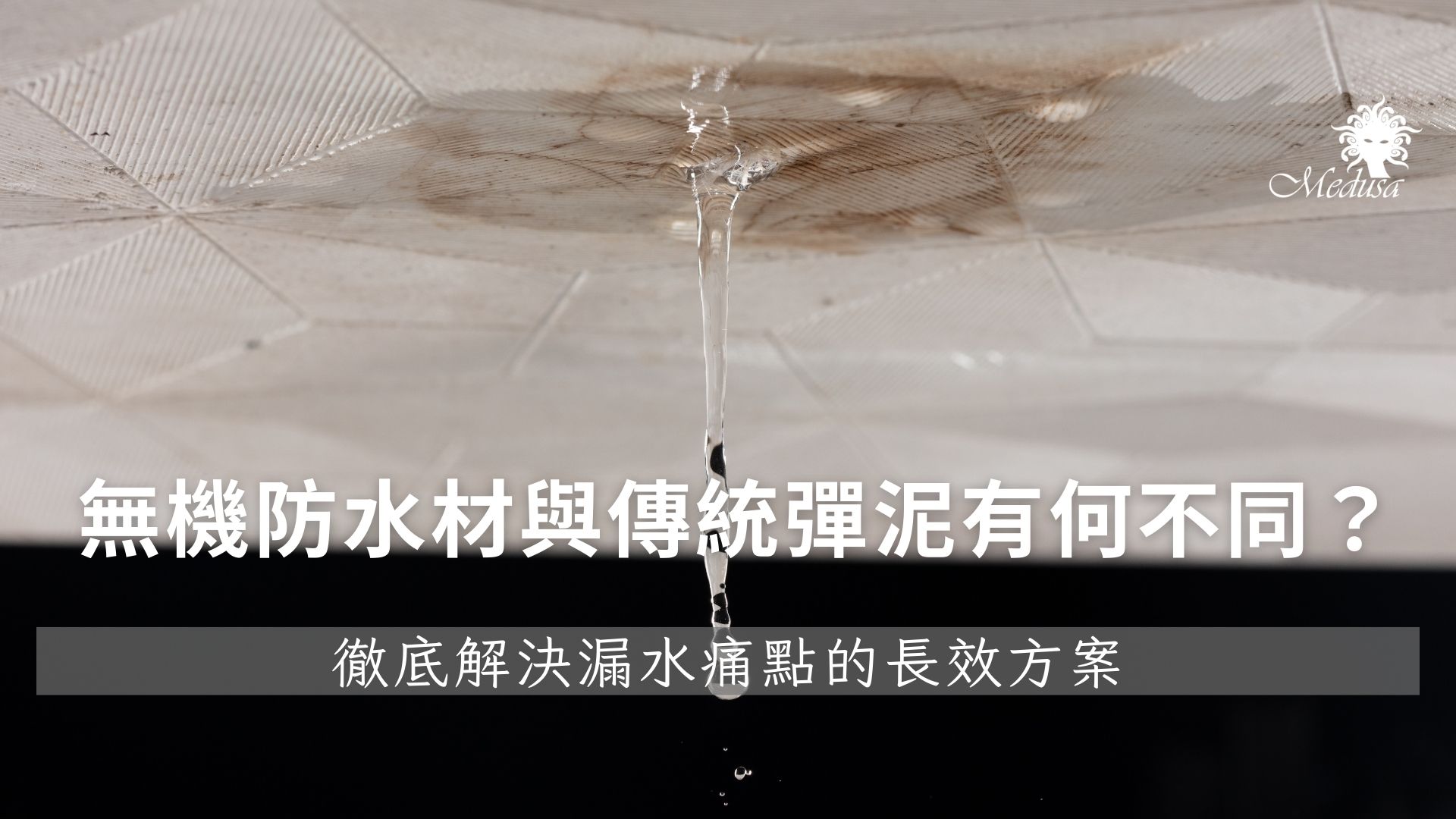
In Taiwan, water leakage is one of the most common building maintenance problems. Taiwan has a hot and humid climate. In summer, roof surface temperatures can exceed 60°C, afternoon thunderstorms are frequent, and coastal areas have high salt content. These conditions accelerate the aging of waterproofing layers. When the material itself is primarily organic, long-term exposure to sunlight can lead to chalking and cracking. Roof seepage, efflorescence on exterior walls, dripping bathroom slabs, and damp basements are issues found in almost every building type. Many homeowners and developers have already invested in waterproofing work, only to face the same problems again a few years later.
Building waterproofing is a core factor in preserving a building’s lifespan. Leakage not only damages interior finishes, but can also lead to steel reinforcement corrosion and threaten structural safety. When a waterproofing layer remains in a humid environment for a long period, hydrolysis can occur in the resin, weakening the adhesion between the waterproofing layer and the structural substrate. This is why many bathrooms experience bubbling tiles or leakage again just a few years after renovation.
Common waterproofing materials on the market include traditional elastic cementitious coatings and modern inorganic waterproofing materials. The two are vastly different in chemical composition and physical performance. This article will help you understand the scientific principles behind inorganic waterproofing and traditional flexible cement so that you can choose the right material and reduce future repair costs.
1. Why Does a House Keep Leaking Even After Repairs?
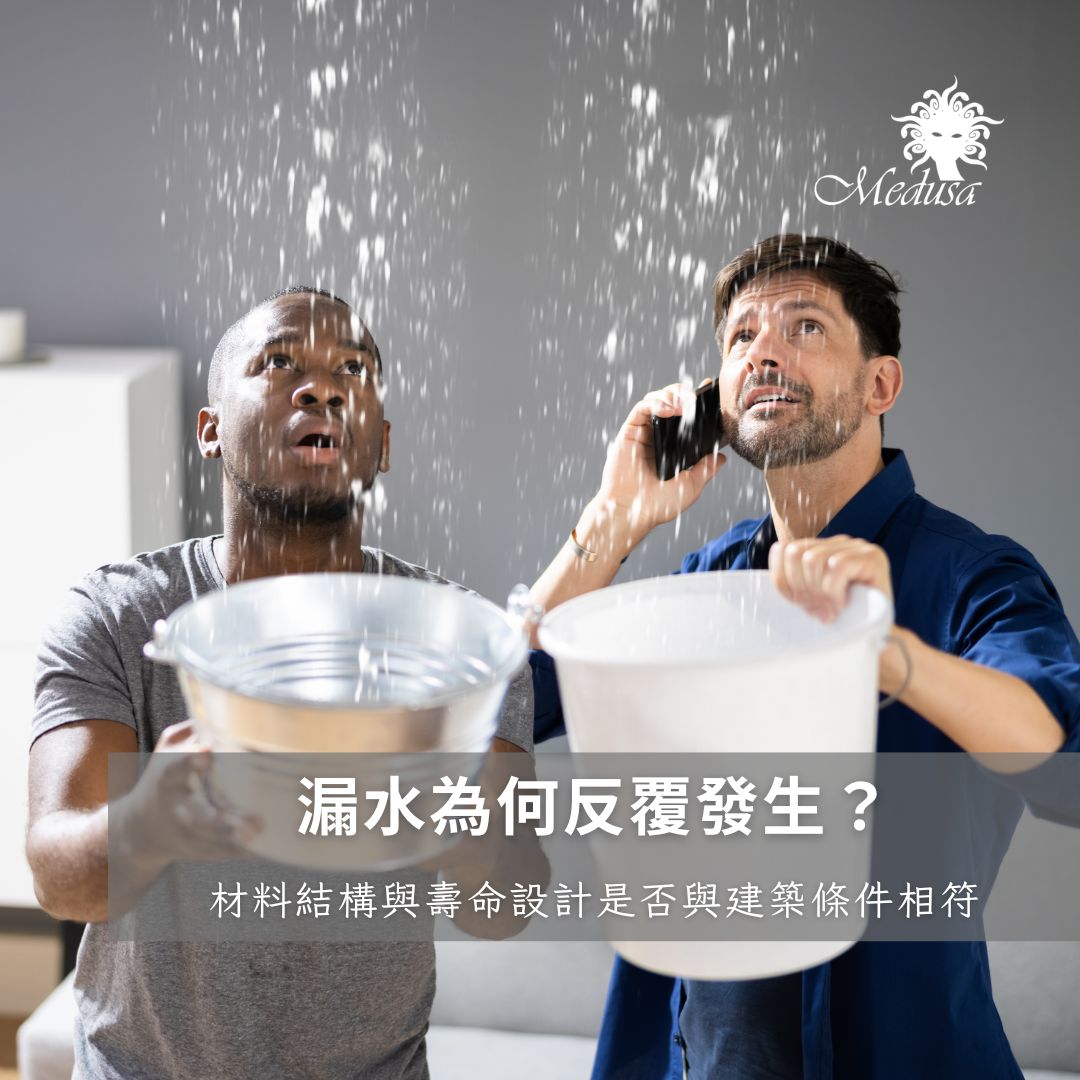
In most construction cases, leakage is not caused by a single crack, but by the accumulation of long-term penetration. Concrete itself has a capillary pore structure. Once the surface protection fails, moisture will seep into the interior of the structure through these pores. As water remains inside for longer periods, steel reinforcement begins to corrode, concrete expands and cracks, and the problem extends from the surface to the structural core.
Many homeowners choose localized patching when they first notice seepage, but overlook whether the entire waterproofing system has already aged. When the repair material cannot fully integrate with the original waterproofing layer, the boundary between the old and new layers can become a new leakage weak point. Without reassessing material lifespan and structural density, leakage problems are only delayed, not eliminated. The issue is not whether waterproofing has been applied, but whether the material structure and service life are truly compatible with the building conditions.
Most seepage cases come from the following three causes:
- The material has aged and lost elasticity.
- The adhesion between the waterproofing layer and concrete has declined.
- Only the surface has been sealed, while capillary penetration inside the structure has not been addressed.
When moisture continues to enter the concrete, steel reinforcement corrodes and expands, cracks widen, and leakage becomes worse. If coatings are repeatedly patched onto the surface, the problem is only postponed, not solved. A truly long-lasting waterproofing strategy must return to the nature of the material itself and a structural integration approach.
Table 1. Common Causes of Exterior Wall Leakage
|
Source of Problem |
Proportion / Data |
Structural Impact |
Long-Term Cost Impact |
|
Material aging |
More than 50% of common seepage cases |
Waterproof layer cracks and peels, allowing moisture into the structure |
Rework needed within 3 to 5 years |
|
Capillary penetration |
Concrete porosity is about 10% to 18% |
Moisture penetrates through pores, causing reinforcement corrosion and expansion |
Structural repair costs increase by 2 to 3 times |
|
Thermal expansion and contraction cycles |
Roof surface temperature differences in Taiwan can exceed 40°C |
Microcracks form, increasing seepage pathways |
Maintenance frequency increases |
Chapter Summary
Leakage problems mostly come from material aging and structural capillary penetration. If only surface cracks are treated, moisture will still enter the concrete and continue to accumulate. The true solution lies in improving structural density and material lifespan, not repeatedly patching local surface defects.
2. What Is Flexible Cement Waterproofing, and Why Does It Leak Again After a Few Years?
Flexible cement is widely used in the market because it is convenient to apply and provides obvious initial waterproofing performance. For short-term handover needs or localized repair projects, coating-type materials offer construction flexibility and cost advantages. However, the core of waterproofing engineering is not the moment of application, but the stability five or ten years later. When a material is mainly made of organic components, aging becomes a factor that cannot be ignored. If UV exposure, temperature cycles, and long-term moisture are not taken into account, the deterioration timeline of the waterproofing layer will come much earlier than the building’s service life.
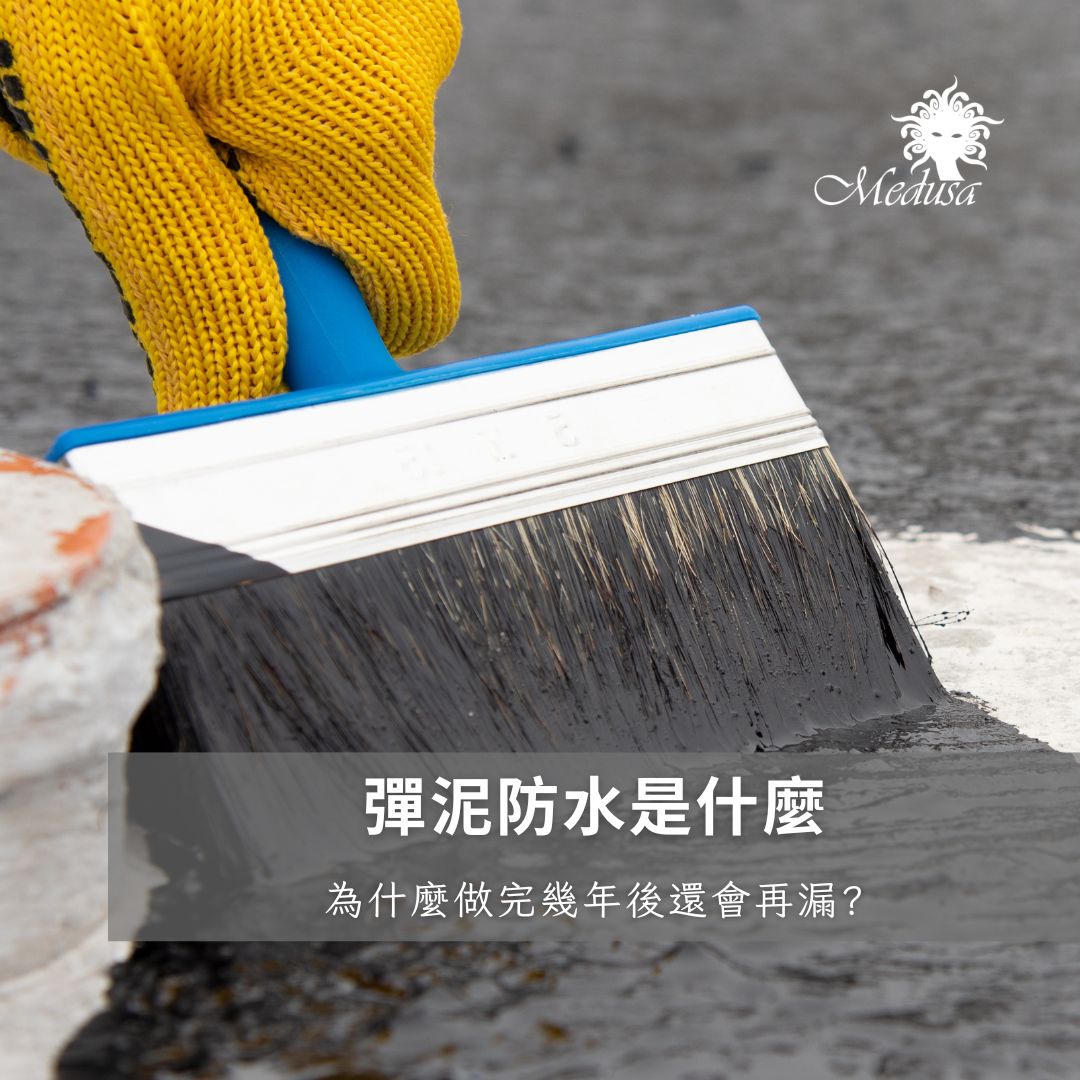
Flexible cement, commonly known as “elastic mud” or “flexible cementitious waterproofing,” is currently one of the most common waterproofing materials on the market. It is made by mixing cement with polymer latex. After application, it forms an elastic coating film that covers the concrete surface. The design principle of flexible cement is to use coating flexibility to absorb microcracks in the substrate. In the early stage, it does provide a certain waterproofing effect, and its application process is relatively mature.
In interior areas such as bathrooms and balconies, if there is a tile protective layer above it, the short-term effect can be stable. However, when applied to long-term exposed areas such as roofs and exterior walls, the material faces several challenges:
- Polymer latex is an organic component. Long-term UV exposure causes molecular chains to break, leading to embrittlement.
- Day-night temperature differences cause repeated expansion and contraction, reducing elasticity year by year.
- Once fine surface cracks appear and water penetrates, delamination can occur between the coating and the substrate.
- When the coating ages, repair usually means recoating rather than solving the issue at the structural level.
The common service life of flexible cement on the market is about 3 to 5 years. Some high-quality products may last up to 7 years, but they are still affected by climate and workmanship. Once the waterproofing layer becomes just a thin membrane attached to the surface, its lifespan is inevitably tied to the aging rate of the material itself. By nature, this is a consumable waterproofing system. For users, repeated rework and scaffolding are the true sources of long-term cost.
Table 2. Common Limitations and Maintenance Risks of Flexible Cement Waterproofing
|
Performance Item |
Data Range |
On-Site Performance |
Maintenance Cycle |
|
Service life |
About 3 to 5 years |
Outdoor exposed areas age faster |
Requires regular full recoating |
|
UV resistance |
Organic latex decomposes over time |
Surface chalking and embrittlement |
Performance drops significantly in 2 to 4 years |
|
Construction duration |
120–180 working days |
45–75 working days |
Construction time reduced by about 60% |
|
Elongation |
Initially about 100% to 200% |
Elasticity declines after aging, reducing crack-bridging ability |
Reinforcement is needed after cracking occurs |
Chapter Summary
Flexible cement forms a surface coating barrier. Its initial waterproofing performance is clear, but its lifespan is affected by the aging of organic components. Once the coating embrittles and peels, waterproofing performance declines accordingly. This type of material is suitable for short-term needs, but it is difficult to support long-term durability design.
3. What Is Inorganic Waterproofing, and How Is It Different from Ordinary Waterproof Coatings?
As the concept of durable building design has matured, market demand for waterproofing materials has shifted from short-term leak stopping to long-term structural protection. If a waterproofing layer only remains on the surface, it still carries the risk of aging and delamination. The development of inorganic waterproofing technology focuses on changing the internal pore structure of concrete so that water cannot move freely through it. When a material penetrates into the substrate and produces a crystallization reaction, the waterproofing function becomes part of the structure itself. This design philosophy transforms waterproofing from an added coating into a structural improvement project.
Inorganic waterproofing materials are based on mineral crystallization technology. After penetrating into the capillary pores of the concrete, they react with moisture and free calcium ions in the cement to form insoluble crystals. These crystals fill pores and microcracks and integrate with the concrete structure. This waterproofing mechanism does not form a film on the surface, but enters the interior of the structure. When moisture penetrates again, the crystallization reaction can continue and further fill voids. This property gives the material long-term stability.
Advantages of Inorganic Waterproofing Materials
- They become integrated with the concrete structure, and their lifespan is synchronized with the substrate.
- They do not contain organic latex, so they are not affected by UV decomposition.
- They can withstand negative water pressure, making them suitable for basements and water tank structures.
- They are resistant to high temperatures and humid climates.
- Their mineral-based composition aligns with low-carbon building material trends.
In new construction projects, if an inorganic waterproofing system is introduced during the structural stage, waterproofing becomes part of the building itself rather than something added afterward. In renovation projects for old buildings, especially where there is exterior wall seepage or basement dampness, inorganic waterproofing materials improve seepage pathways from within the substrate rather than merely sealing the surface. This design approach upgrades waterproofing from a coating item to a component of durability design.
Table 3. Performance and Application Areas of Inorganic Waterproofing
|
Technical Feature |
Data Range |
Structural Impact |
Lifespan Performance |
|
Penetration depth |
About 10 to 30 mm, depending on concrete density |
Improves capillary pore density |
Exists as long as the structure exists |
|
Water pressure resistance |
Can resist more than 5 bar of negative water pressure |
Suitable for basements and water-related structures |
Reduces reverse seepage risk |
|
Material composition |
Primarily mineral-based, low organic content |
UV resistant, slow aging |
Lifespan close to concrete structure |
Chapter Summary
Inorganic waterproofing strengthens the internal structure of concrete through penetration and crystallization, making waterproofing part of the substrate itself. The material has high weather resistance and a lifespan synchronized with the structure. This design approach transforms waterproofing from an added layer into a structural improvement project.
4. Which Is Better: Inorganic Waterproofing or Flexible Cement? Start by Looking at These 7 Differences
Traditional waterproofing materials have relatively short service lives. Frequent renovation work generates large amounts of construction waste, increasing waste disposal burdens. Inorganic waterproofing materials provide long-lasting protection, extend the building maintenance cycle, and directly reduce material consumption as well as carbon emissions from transportation and repeated construction.
Material selection in engineering should not be based on a single performance factor. It should be evaluated comprehensively from the perspectives of material mechanism, lifespan, maintenance strategy, and environmental adaptability. Surface coating films and penetrating crystallization are two completely different technical paths. The former relies on coating integrity, while the latter relies on substrate density. When buildings are exposed to long-term climate changes and moisture pressure, the durability performance of the two materials diverges significantly.
Flexible cement is a surface coating-type waterproofing system, while inorganic waterproofing materials are penetrating crystallization structural waterproofing systems. Flexible cement depends on coating integrity; once damaged, it fails. Inorganic waterproofing depends on structural density, so even if the surface wears, waterproof performance remains.
Differences from the Following Perspectives
- Lifespan: The lifespan of flexible cement is tied to the aging rate of organic latex. The lifespan of inorganic waterproofing is close to that of the concrete structure itself.
- Maintenance strategy: Flexible cement requires regular inspection and recoating. Inorganic waterproofing focuses on one-time structural improvement.
- Sustainable building perspective: Organic coatings are consumable materials, while mineral-based waterproofing is a long-life design solution.
Table 4. Comprehensive Comparison Between Inorganic Waterproofing and Flexible Cement
|
Comparison Item |
Flexible Cement |
Inorganic Waterproofing Material |
Long-Term Benefit / Application Scenario |
|
Waterproofing mechanism |
Surface coating seals pores |
Penetrating crystallization, structurally integrated |
High long-term stability |
|
Service life |
3 to 7 years |
Can exceed 10 years |
Reduces frequency of rework |
|
Maintenance frequency |
Renovation every 3 to 5 years |
In most cases, inspection only |
Reduces life-cycle cost |
|
Positive water pressure resistance |
Good |
Excellent |
Suitable for exterior walls and roofs |
|
Negative water pressure resistance |
Very poor, easy to delaminate |
Excellent, does not peel |
Solves basement leakage |
|
Substrate moisture requirement |
Must be completely dry |
Must be thoroughly dampened |
Shortens waiting time during construction |
|
Water vapor permeability |
Low, prone to trapped moisture |
High, allows the structure to breathe |
Helps prevent internal steel corrosion |
Under ESG assessments and low-carbon building standards, reducing rework frequency and material waste has become an important criterion in engineering material selection. If waterproofing is viewed as a building maintenance item with a lifespan of more than ten years, the differences in materials will directly affect the total cost.
Table 5. Ten-Year Total Waterproofing Cost Comparison
|
Sustainability Indicator |
Impact of Organic Materials |
Inorganic Material Solution |
Environmental Benefit |
|
Volatile organic compounds (VOC) |
Organic solvent emissions |
Zero VOC release |
Protects worker health |
|
Construction waste volume |
Waste generated every 5 years during removal |
Zero maintenance waste |
Reduces environmental burden |
|
Carbon footprint assessment |
High-frequency transportation and construction |
One-time long-term protection |
Supports carbon reduction goals |
|
Green building compliance |
Partially compliant |
Fully compliant with standards |
Improves project certification level |
Chapter Summary
Coating-type and penetrating-type materials are fundamentally different in technical mechanism. The former depends on surface integrity, while the latter strengthens substrate density. As time passes and climate exposure continues, the gap in durability becomes increasingly clear.
5. In Which Leakage Situations Is Inorganic Waterproofing More Suitable?
Different building conditions require different waterproofing materials. If the work is limited to dry indoor spaces, coating-type materials can still be effective to some extent. However, when a project involves long-term exposure, groundwater pressure, or structural cracking, material selection must be more cautious. Using a structural waterproofing system in high-risk areas can effectively reduce future maintenance frequency and warranty disputes.
During consultations, one of the most common concerns we hear is: “If the old issues are hidden inside, is that really okay?” This reflects a natural human anxiety about what cannot be seen. In reality, this fear comes from confusion between the concepts of covering and encapsulation. Covering hides the problem, while what we advocate is a dual mechanism of mechanical locking and chemical bonding. In the following situations, introducing an inorganic waterproofing system offers greater long-term value:
- Old exterior wall renovation projects: Exterior walls often develop efflorescence because of cracks and capillary seepage. Penetrating crystalline materials can improve structural density.
- Basements and foundation structures: Basement seepage is often caused by negative water pressure. Surface coatings can easily be pushed off by water pressure. Inorganic materials can block the seepage pathway from within.
- Long-term sun-exposed roof areas: High temperatures and UV accelerate the aging of organic coatings. Mineral-based materials offer more stable weather resistance.
- Pools and water tank structures: Long-term immersion requires a waterproofing system that bonds with the concrete itself.
- Green building projects or developments that prioritize ESG: Low-carbon materials and long-life design help reduce life-cycle emissions.
For architects, if waterproofing design is integrated into structural thinking at the planning stage, future maintenance risks are greatly reduced. For contractors, reducing seepage disputes during the warranty period means lower management costs. For property owners, a one-time, well-executed solution is more economical than repeated patching.
Table 6. Common Leakage Situations and Recommended Methods
|
Project Type |
Risk of Traditional Materials |
Medusa Paint Solution |
Investment Benefit |
|
Old building façade renovation |
Failure caused by moisture in the substrate |
Penetration-based strengthening of aging structures |
Extends building service life |
|
New construction foundation |
Corrosion from soil moisture contact |
Permanent moisture-resistant barrier |
Ensures a non-leaking foundation |
|
Bathroom interior renovation |
Water accumulates under tiles and causes delamination |
Structural body seepage prevention |
Reduces the chance of efflorescence and wall damage |
|
Landscape pools / basements |
Failure under alternating positive and negative water pressure |
Compression-resistant crystalline sealing technology |
Reduces property maintenance costs |
|
Basement structures |
About 40% of seepage cases come from negative water pressure |
Penetrating crystallization resists reverse seepage |
Reduces long-term leakage |
|
Roof exposure areas |
More than 8 hours of UV exposure |
Organic coatings age quickly |
Mineral materials remain weather-stable |
|
Old exterior walls |
Buildings over 15 years old tend to have a higher crack ratio |
Improves capillary seepage |
Reduces the occurrence of wall deterioration |
Chapter Summary
Under conditions of strong sun exposure, high water pressure, and structural aging, structural waterproofing systems are more stable. Material selection should be based on the building’s risk level rather than only on one-time construction cost. Long-term maintenance value is the true decision-making core.
6. How Should You Choose a Waterproofing Project? Compare One-Time Construction Cost or Total Cost Over Ten Years?
Most waterproofing decisions are driven by budget rather than life-cycle analysis. When only comparing a one-time quotation, future rework costs are often overlooked. If project planning evaluates material lifespan on a ten- to twenty-year timeline, the material selection outcome will be completely different. Waterproofing should be seen as part of asset preservation rather than a one-time expense. That is the mature approach to building management.
Most market decisions focus only on the initial project price and ignore future maintenance and rework costs. If calculated over a ten-year period, assuming flexible cement needs to be redone every four years, at least two major renovations will be required within ten years. This includes scaffolding, labor, removal of old layers, and material costs, resulting in a total expenditure far higher than the initial installation cost. If an inorganic waterproofing system is applied once, only routine inspections are usually needed afterward, and the total long-term cost is lower.
The core of building maintenance is not the lowest unit price, but the lowest life-cycle cost. When waterproofing is integrated with the structure, the building’s lifespan naturally extends. A long-term waterproofing strategy should include three principles:
- Improve the structure to address the source of seepage.
- Choose weather-resistant and durable materials.
- Integrate waterproofing into the overall building design.
Table 7. Cost Difference Between Flexible Cement and Inorganic Waterproofing
|
Evaluation Period |
Flexible Cement Cost Structure |
Inorganic Waterproofing Cost Structure |
Ten-Year Total Cost Difference |
|
One-time construction |
Lower initial unit cost |
Higher initial unit cost |
Difference of about 15% to 30% |
|
Number of reworks within ten years |
About 2 to 3 times in most cases |
One-time structural improvement |
Ten-year total cost can be reduced by more than 20% |
|
Scaffolding and labor cost |
High proportion of repeated expense |
Low frequency |
Management cost drops significantly |
Chapter Summary
If waterproofing is evaluated over a life cycle of more than ten years, the logic of material selection shifts toward durability and stability. A one-time structural improvement helps reduce rework and maintenance risks. Long-term cost management is the truly mature engineering strategy.
7. Frequently Asked Questions: A Quick Guide to Choosing Inorganic Waterproofing
Q1. What is inorganic waterproofing?
Inorganic waterproofing is a waterproofing method based on mineral penetrating crystallization technology. The material enters the capillary pores of concrete and forms crystals, strengthening substrate density rather than simply remaining on the surface.
Q2. What is the difference between inorganic waterproofing and flexible cement?
Flexible cement is a surface coating-type waterproofing material that relies on the integrity of the surface to block water. Inorganic waterproofing is a structural waterproofing system that blocks seepage pathways inside the concrete. The two differ significantly in lifespan, maintenance frequency, and resistance to negative water pressure.
Q3. What kinds of leakage situations are suitable for inorganic waterproofing?
Exterior wall seepage, sun-exposed roof areas, basement dampness, pools, water tanks, and structural seepage in old buildings are all situations better suited for inorganic waterproofing evaluation.
Q4. Why is inorganic waterproofing more cost-effective in the long term?
Because it focuses on reducing the frequency of rework. It lowers spending on labor, scaffolding, removal of old layers, and repeated patching. Therefore, the ten-year total cost is usually lower than repeatedly redoing surface waterproofing systems.
Q5. Why does flexible cement leak again a few years after installation?
Because flexible cement is mainly composed of organic ingredients. After long-term exposure to sunlight, thermal expansion and contraction, and moisture cycles, it tends to become brittle, crack, and delaminate. Once the surface coating loses integrity, moisture re-enters the concrete. That is why many projects require rework again after only three to five years.
Q6. Can inorganic waterproofing materials resist negative water pressure?
Yes. One of the main characteristics of inorganic waterproofing materials is that they can withstand negative water pressure. This makes them suitable for basements, pools, water tanks, and other structures with a high risk of reverse seepage. This is also an area where traditional surface coatings often struggle to perform consistently.
Q7. How long does inorganic waterproofing last?
The waterproofing function of inorganic waterproofing materials remains in sync with the structure. Its lifespan is close to that of the concrete itself. Compared with flexible cement, which usually requires renovation every three to five years, inorganic waterproofing is more suitable for long-term durability design. Over a ten-year evaluation cycle, total maintenance costs are usually lower.
Q8. If an old building already has an old waterproofing layer, is inorganic waterproofing still suitable during renovation?
The answer depends on the actual substrate condition. If the issue is only surface aging, but the concrete body already has capillary seepage, cracks, or dampness, it should be reassessed from a structural perspective. The most common mistake in old building renovation is to patch only the surface without addressing substrate moisture and structural seepage pathways, which leads to leakage recurring quickly. The key point of inorganic waterproofing is to improve the concrete body itself.
8. Medusa Paint’s Inorganic Waterproofing System: What Types of Building Waterproofing Needs Is It Suitable For?
When waterproofing strategies shift from surface patching to structural integration, the technical depth of the material brand and the completeness of the system become crucial. Medusa Paint specializes in the development of mineral-based architectural coatings and inorganic waterproofing systems. By integrating penetrating crystallization technology with exterior wall coating systems, waterproofing and protection can be achieved simultaneously.
Through inorganic structural waterproofing reinforcement technology, buildings can achieve the following results:
- Extend structural lifespan and reduce the risk of steel corrosion and concrete deterioration.
- Reduce repeated renovation and scaffolding costs every three to five years.
- Improve the overall weather resistance of exterior walls and maintain façade quality.
- Reduce seepage disputes and management pressure during warranty periods.
- Meet low-carbon and ESG building trends by reducing material waste and construction frequency.
Table 9. Final Performance Analysis of the Medusa Paint Solution
|
Performance Dimension |
Maintenance Cost (10 Years) |
Building Asset Value |
Occupant Satisfaction |
|
Using traditional flexible cement |
Cost of rework more than twice |
Declines with leakage problems |
Frequent complaints and repairs |
|
Using Medusa Paint inorganic solution |
Approaches zero |
Preserved through structural stability |
Stable and secure living experience |
|
Benefit comparison |
High spending cost |
Stronger asset liquidity |
Builds brand reputation |
|
Final data evaluation |
Lower economic performance |
Higher return on investment |
Better living health and comfort |
What We Want to Say
To
architects: Medusa
provides a structural waterproofing design philosophy that integrates
waterproofing into durable design.
To contractors: Medusa’s systematic material integration can improve
project stability.
To homeowners and property management teams: Long-lasting waterproofing
means more predictable maintenance costs and more stable asset value.
Chapter Summary
Choosing Medusa Paint is not simply choosing a material. It is about establishing a complete long-term protection system for a building. When waterproofing and mineral coatings are planned together, the building envelope gains higher density and better weather stability, allowing service life and maintenance efficiency to improve at the same time.
Contact Information
Phone: 07-365-6297
Address: No. 4, Dong 3rd Street, Nanzih Export Processing Zone,
Kaohsiung City
Website: https://reurl.cc/MzRe4X
Line: https://reurl.cc/KOoYVq
Further Reading
- Medusa Paint Implements ESG and Wins the 2025 Taiwan Excellence Award
- Imitation Fair-Faced Concrete: Medusa Paint Demonstrates Both Aesthetics and Environmental Potential
- Medusa Paint: The Best Solution for Weather-Resistant Building Materials
