

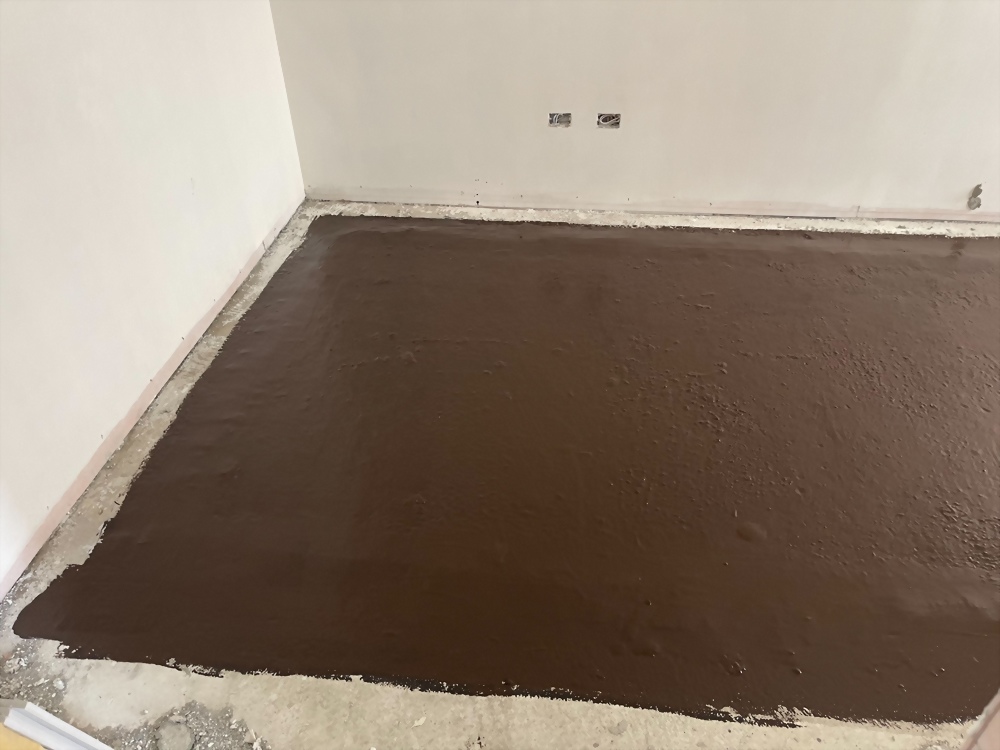
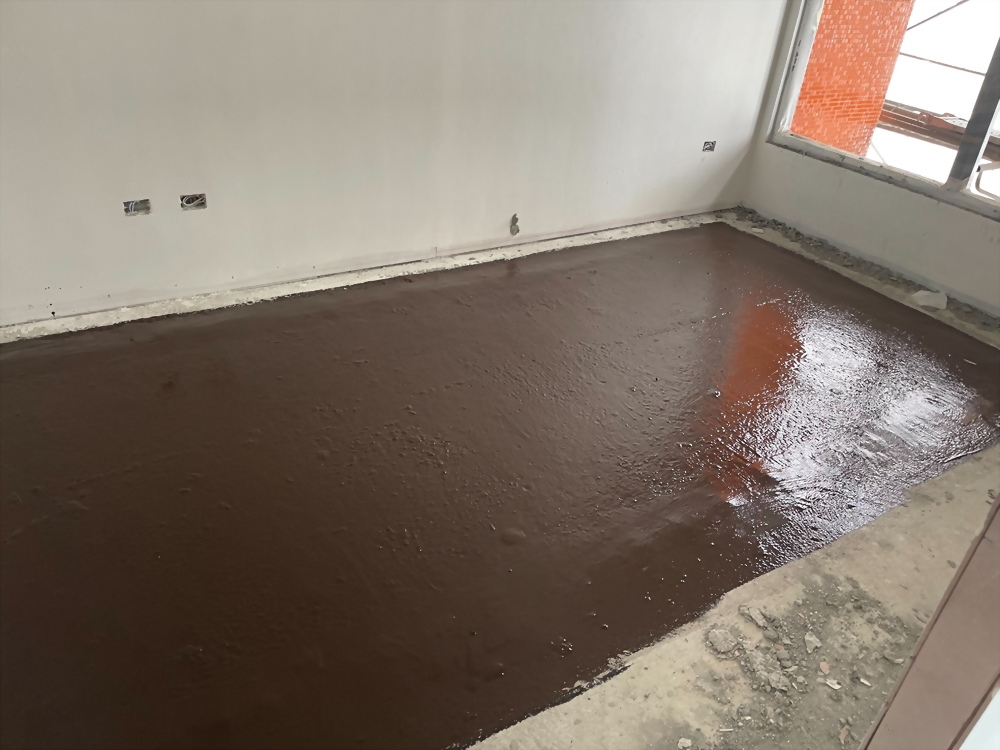
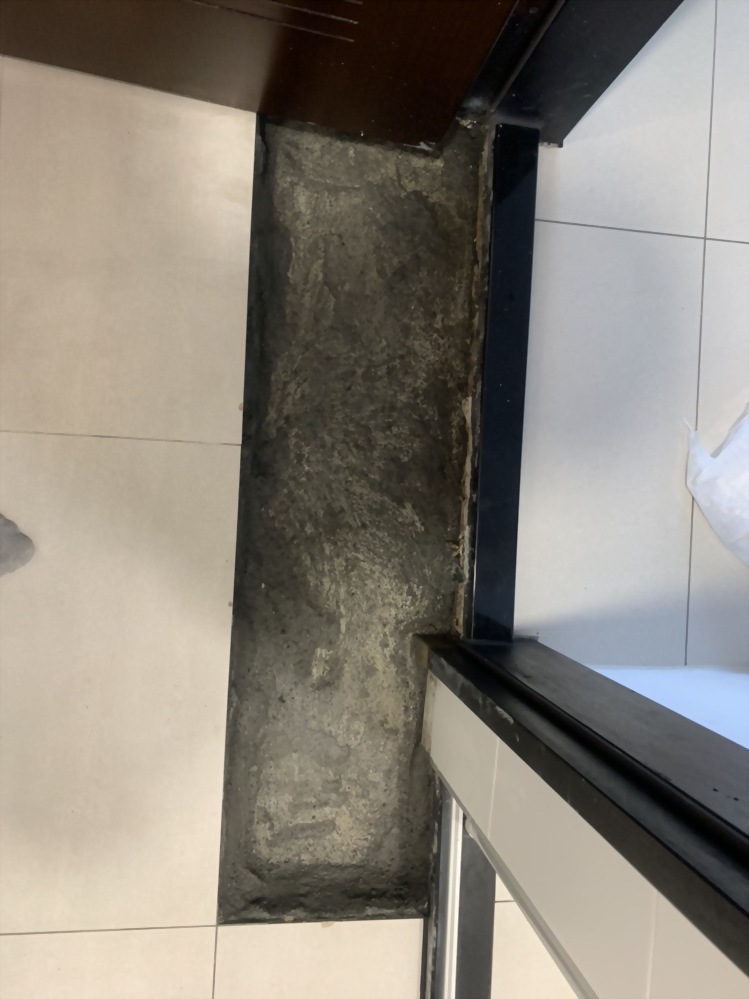
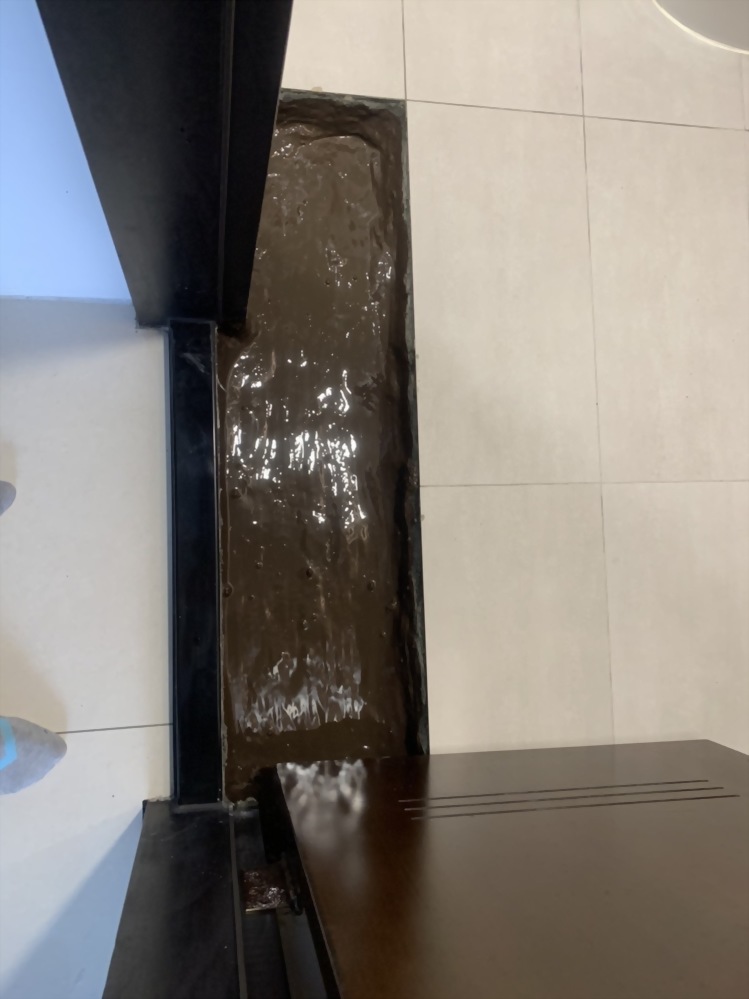
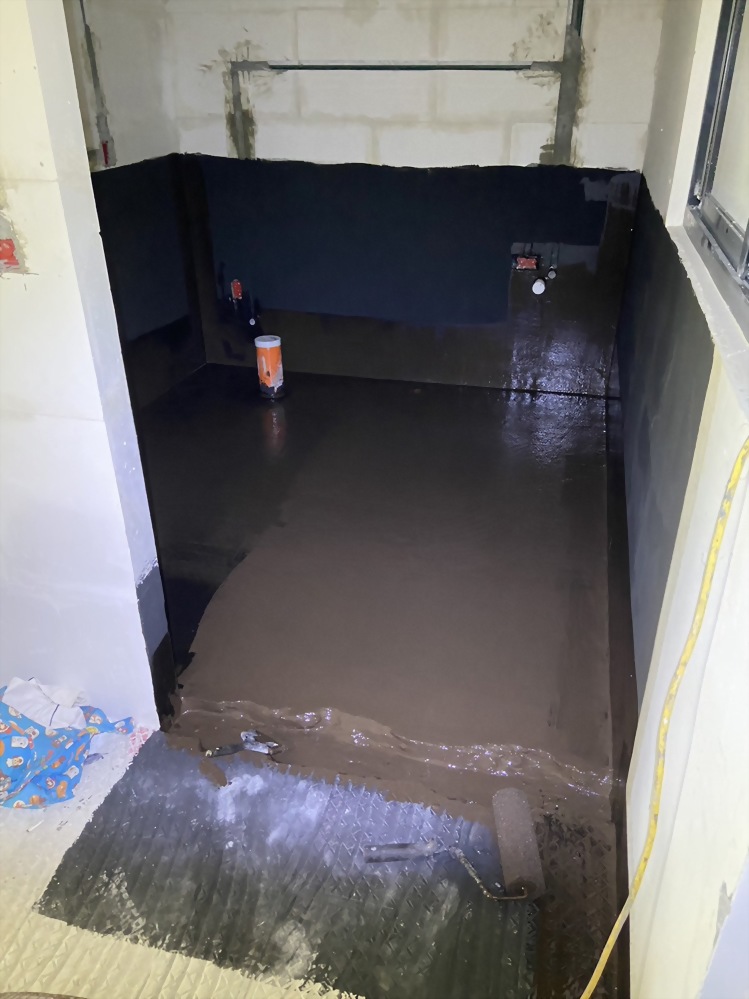
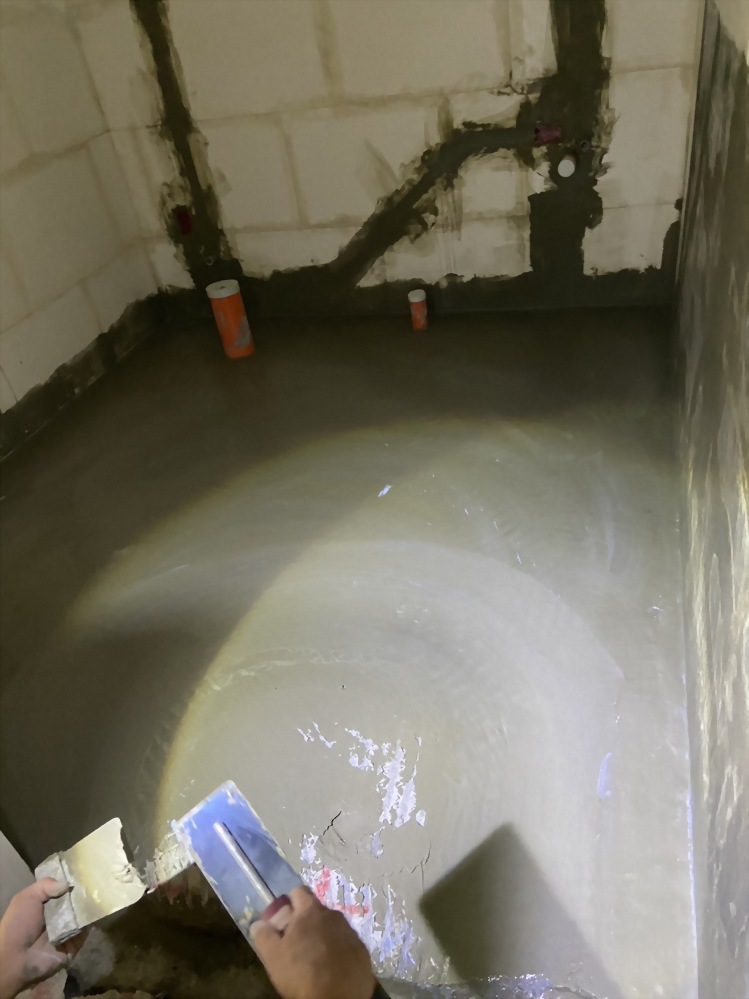
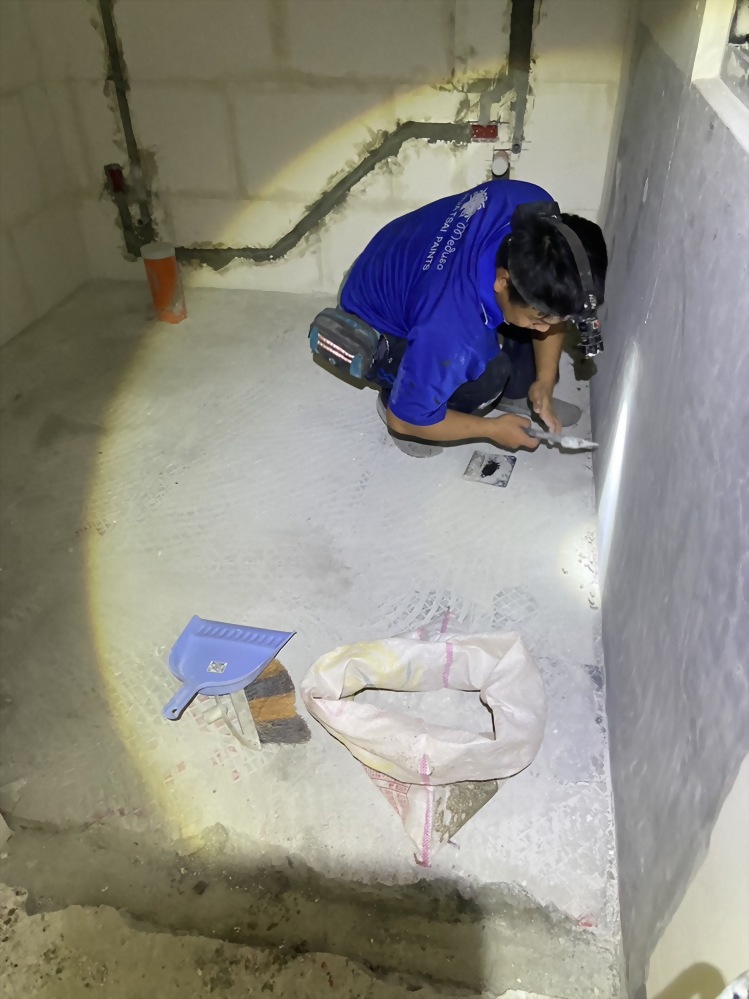
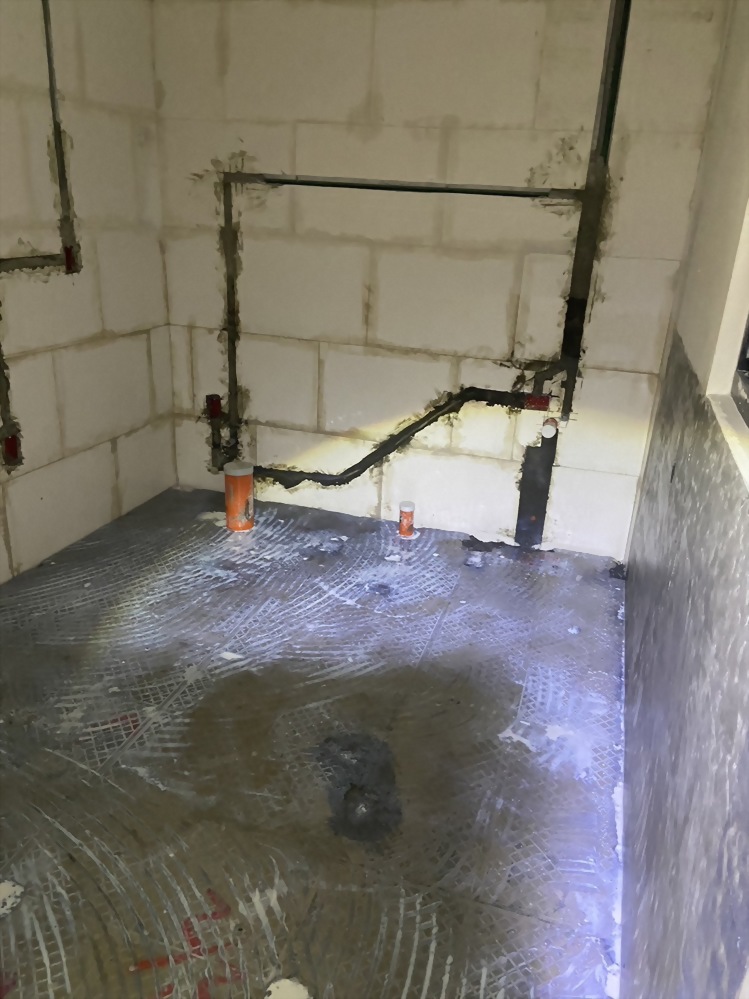
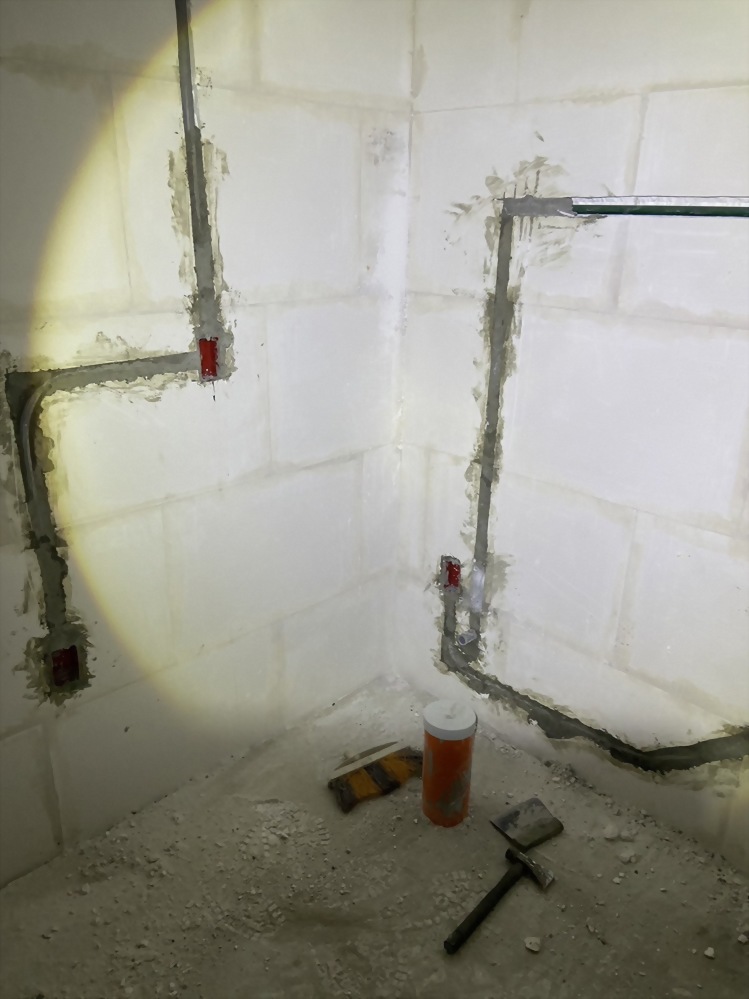
室內防水工程
Water-Based Black Waterproof Membrane System | Match Your Roof's Condition First
Get the waterproofing wrong once, and every rainstorm becomes a stress test. Water-based EVA polymer-modified rubberized asphalt membrane — German-formula, low VOC, thick-film formation, crack-following capability. Ideal for old roof renovation, complex joint repair, and situations where both budget and efficiency matter.
Match Your Roof's Problem First
|
What You're Seeing |
What It Means |
What Needs to Be Done |
|
Indoor leaking after rain |
Waterproof layer aged or joint detail failed |
Joint reinforcement + full membrane rebuild |
|
Old membrane bubbling / cracking |
Substrate moisture or UV degradation |
Add white reflective topcoat or full renewal |
|
Water seeping near gutters or drains |
Poor edge sealing or missing reinforcement strip |
Reinforcement fabric layer + contoured drainage sealing |
|
Leaking at inside corners or pipe penetrations |
Joint areas not reinforced with fabric |
Polyester non-woven / fiberglass tape reinforcement |
|
Top-floor rooms extremely hot in summer |
Black roof surface absorbing large amounts of heat |
Apply white high-reflectance weatherproof topcoat |
|
Metal roof seam joints leaking |
Metal corrosion or aged silicone sealant |
Rust removal + degreasing + metal primer + membrane |
4 Things to Confirm Before Work Begins
Skip any one of these and problems will appear after completion.
- Moisture content — Substrate moisture must be ≤ 8–12%. Exceeding this causes immediate bubbling and delamination. Allow sufficient drying time after rain before any work begins.
- Substrate type — RC concrete, metal sheeting, old black membrane, and old asphalt each require a different primer. They are not interchangeable.
- Joint locations — Inside corners, pipe penetrations, floor drains, and expansion joints are the source of 90% of all leaks. Each must be individually reinforced.
- Residual silicone — Old silicone sealant residue must be fully removed before application. New membrane will not bond over it.
System Construction | 4-Layer Protection Logic
Layer 1 | Substrate Preparation
High-pressure cleaning → remove loose coating → degrease → remove old silicone → V-groove crack cutting + resin fill Joint details first: inside corners, pipe penetrations, and floor drains get polyester non-woven / fiberglass tape reinforcement strips before membrane application
Layer 2 | Primer (Selected by Substrate Type)
|
Substrate Type |
Required Primer |
|
Concrete / powdering mortar surface |
Modified acrylic cement-type bonding agent — penetrating seal |
|
Metal (steel sheeting / galvanized) |
Metal-specific anti-rust primer (phosphate or zinc-based) |
|
Smooth glazed tile surface |
Tile-type bonding adhesive agent |
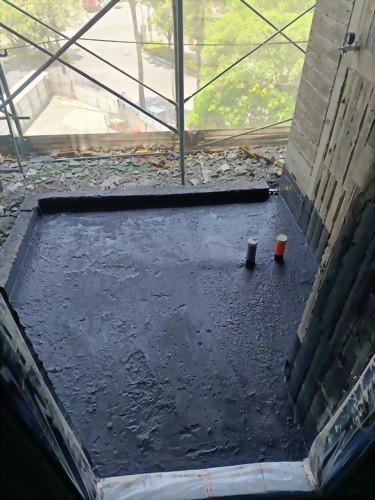
Layer 3 | Main Black Membrane Application
Key rule: Multiple thin coats — never apply thick in a single pass (surface dries while interior stays wet, causing blistering)
|
Protection Level |
Coverage Rate |
Number of Coats |
Dry Film Thickness |
|
Standard roof |
1.5–2.0 kg/m² |
2–3 coats |
Approx. 1.0–1.5 mm |
|
High protection (gutters, ponding-risk areas) |
2.5–3.5 kg/m² |
3–4 coats |
Approx. 1.5–2.0 mm |
Inter-coat waiting time: surface-dry in approx. 1–3 hours — proceed when touch-dry and no longer tacky Full cure: allow 48–72 hours before exposure to prolonged standing water
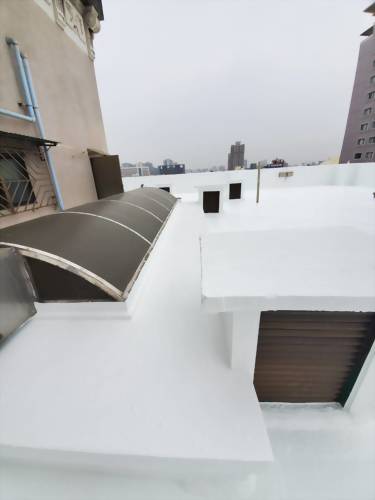
Layer 4 | White Reflective Weatherproof Topcoat (Strongly Recommended)
In Kaohsiung's intense UV environment, black membrane exposed directly to sun will degrade prematurely. Adding white high-reflectance topcoat (acrylic / silicone resin / fluorocarbon): ✔ Reduces surface temperature by 10–20°C ✔ UV-resistant ✔ Anti-fouling ✔ Significantly extends service life ✔ Simultaneously reduces heat load in top-floor rooms
Black membrane + white reflective topcoat = one of the most stable roof configurations for southern Taiwan
Standard Construction SOP
1. High-pressure cleaning (removes dirt, loose coating, old silicone)
2. V-groove crack cutting + resin injection fill
3. Joint reinforcement strips (non-woven fabric / fiberglass tape)
4. Primer application (matched to substrate type)
5. Black membrane — 1st coat (roller or brush application)
6. Reinforcement fabric placement (over crack zones, corners, slab joints)
7. Black membrane — 2nd coat (applied in crossing direction)
8. 3rd–4th coats as required by protection level
9. White reflective weatherproof topcoat — 2 coats
10. Floor drain and gutter edge sealing + metal cover strip
11. Post-completion water-spray leak test (30–60 minutes continuous)
Weather requirements: temperature 5–35°C, relative humidity < 85%, no rainfall within 6–8 hours after application
6 Common Failures — Almost All Preventable
|
Failure |
Cause |
Prevention |
|
Bubbling, whitening, delamination |
Substrate moisture content too high |
Measure before work — wait out rainy season windows |
|
Blistering after sun exposure |
Single thick coat — surface dry, interior wet |
Multiple thin coats, confirm inter-coat drying |
|
Joint leaks recurring |
Inside corners and pipe penetrations not reinforced |
Non-woven or fiberglass fabric layer — mandatory |
|
Metal surface delaminating quickly |
Applied over undegreased or rusted metal |
Grind to bare metal sheen + metal-specific primer |
|
Membrane degrading early |
Direct intense UV exposure in southern Taiwan |
Apply white reflective topcoat |
|
Floor drain backflow leaking |
Poor edge sealing |
Reinforcement strip + contoured drainage detailing + metal cover strip |
Check These 5 Points Before Final Sign-Off
- Visual inspection — No pinholes, no drip marks, no uncovered areas, uniform overlaps throughout
- Film thickness — Dry film spot-check measurement, or verify against material consumption vs. area (±10% tolerance)
- Adhesion — Cross-cut test (ASTM D3359) grade 0–1; pull-off test where required
- Water-spray test — 30–60 minutes continuous spray, with focused checks at gutters and floor drains
- Joint photo documentation — Reinforcement fabric, inside corners, pipe penetrations, parapet wall edge capping, and drain collar details must all have construction records
Pricing Reference
Actual quotes vary based on roof area, joint complexity, substrate condition, and building height.
|
Work Item |
Reference Price |
|
Standard roof waterproofing (2–3 coats black membrane) |
Approx. NT$ 800–1,800 / ping |
|
High-protection level (3–4 coats + reinforcement fabric) |
Approx. NT$ 1,500–2,800 / ping |
|
White reflective weatherproof topcoat (add-on) |
Approx. NT$ 300–600 / ping |
|
Joint repair (gutters, pipe penetrations, corners) |
Priced per location — quoted separately |
|
Metal roof rust removal and primer surcharge |
Based on corrosion severity — quoted separately |
Copy & Send This to Any Contractor When Requesting a Quote
I need a water-based EVA polymer-modified rubberized asphalt membrane roofing waterproofing system. Please provide:
- Product TDS / SDS: solid content, VOC, elongation rate, tensile strength, low-temperature flexibility, water impermeability data
- Design coverage rate and dry film thickness (standard areas / gutters / joints — listed separately)
- Primer recommendations (concrete / metal / tile — each matched separately) + reflective topcoat recommendation
- Construction SOP: inter-coat intervals, temperature/humidity limits, post-rain waiting time
- Reinforcement fabric specs: weight per m², width, overlap method
- Itemized quote: substrate preparation / primer / membrane / fabric / topcoat / edge sealing / debris removal
- Warranty terms: water leakage / adhesion / powdering — years covered for each
- Kaohsiung-area project references (coastal / high-UV environments) with photos
When requesting a quote, please provide first: roof area, substrate type (RC / metal / old asphalt), current problems (leaking / cracking / heat), and whether the location is coastal or severely west-facing.