

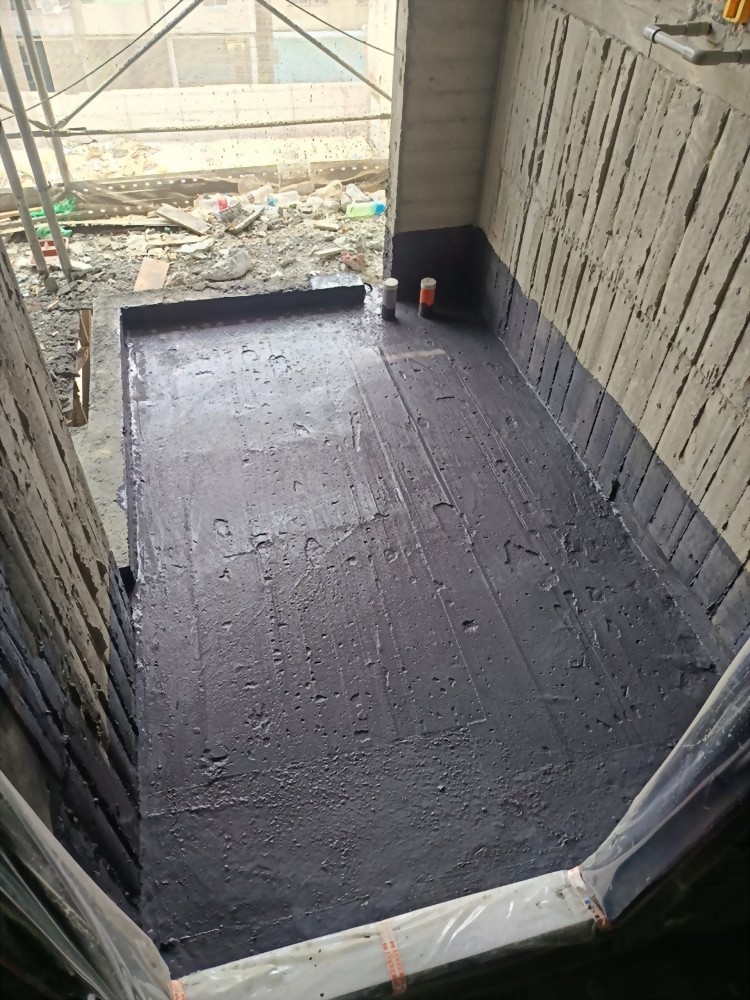
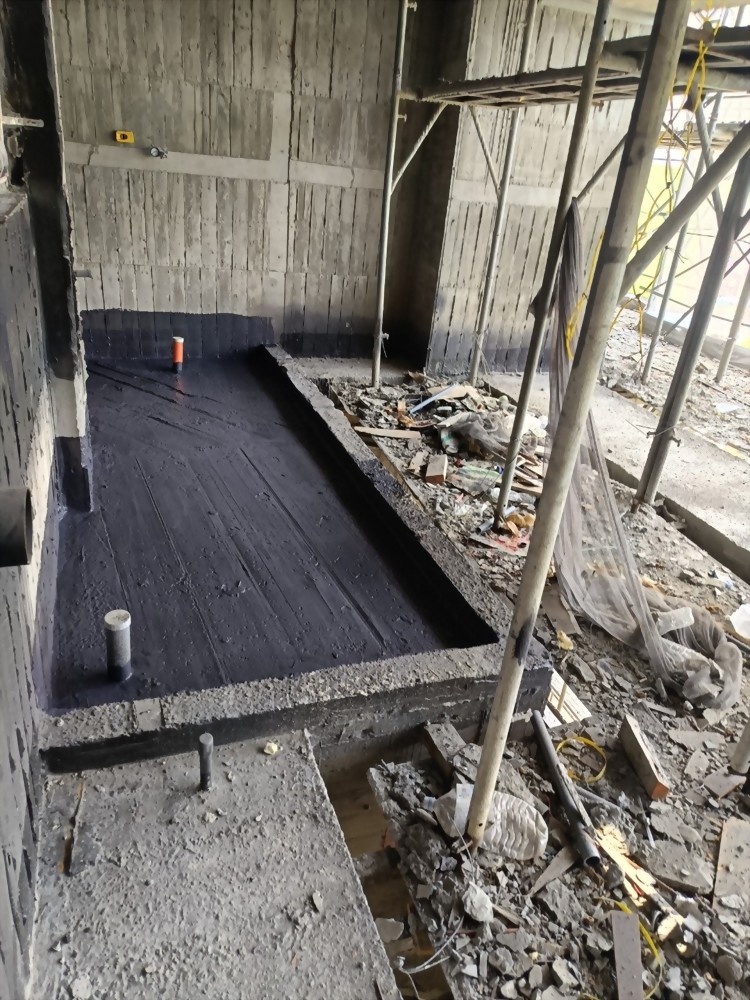
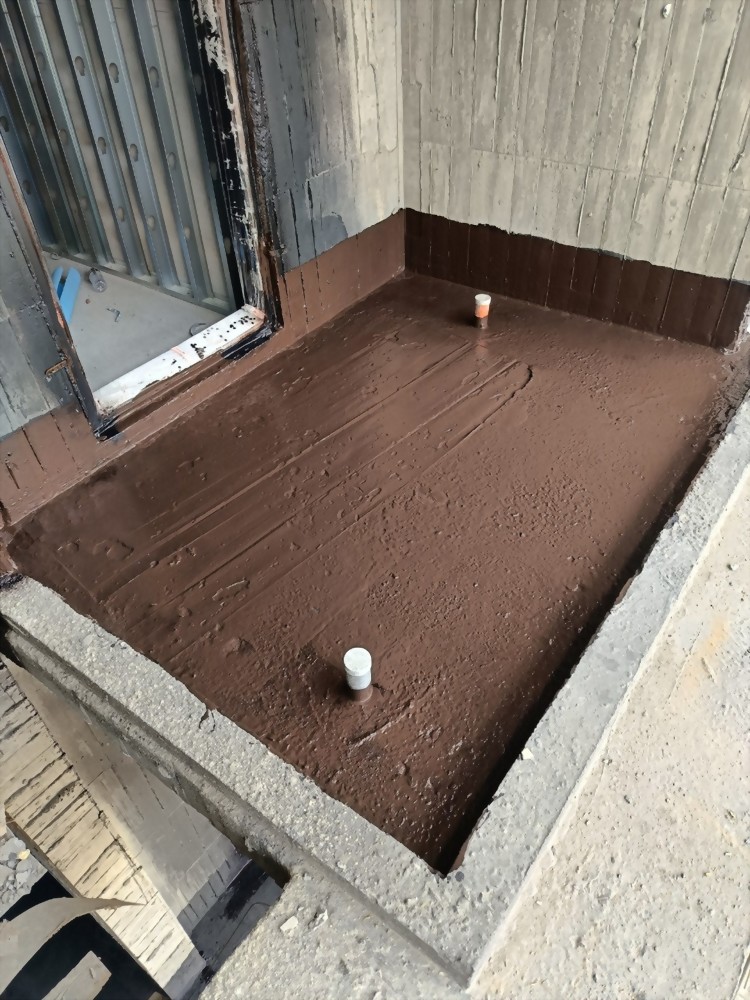
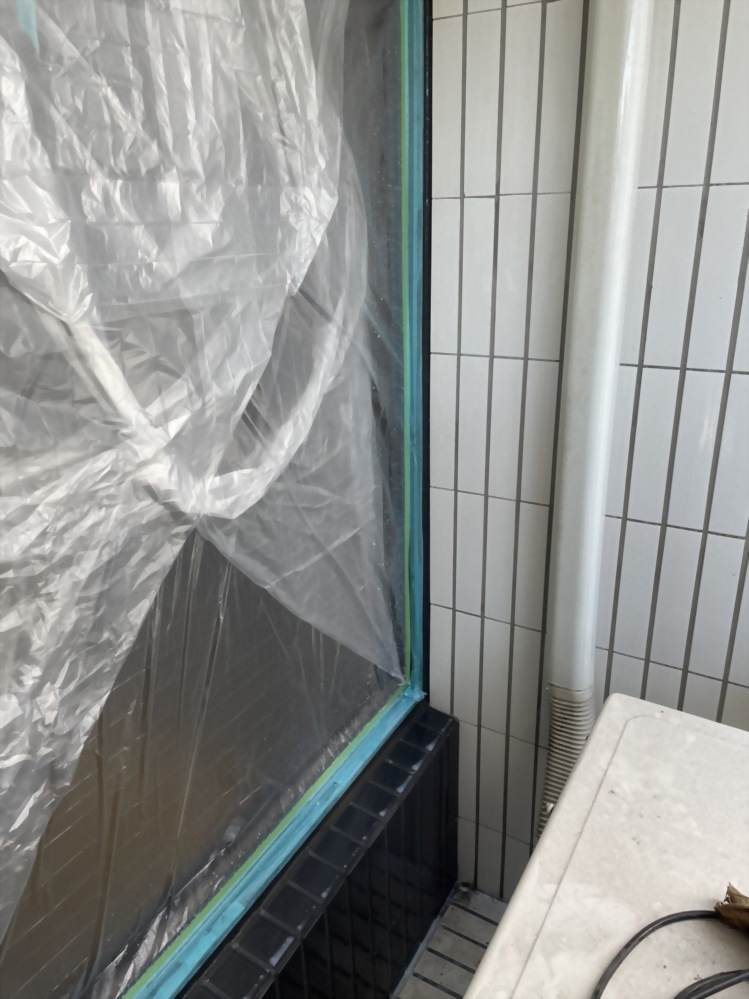
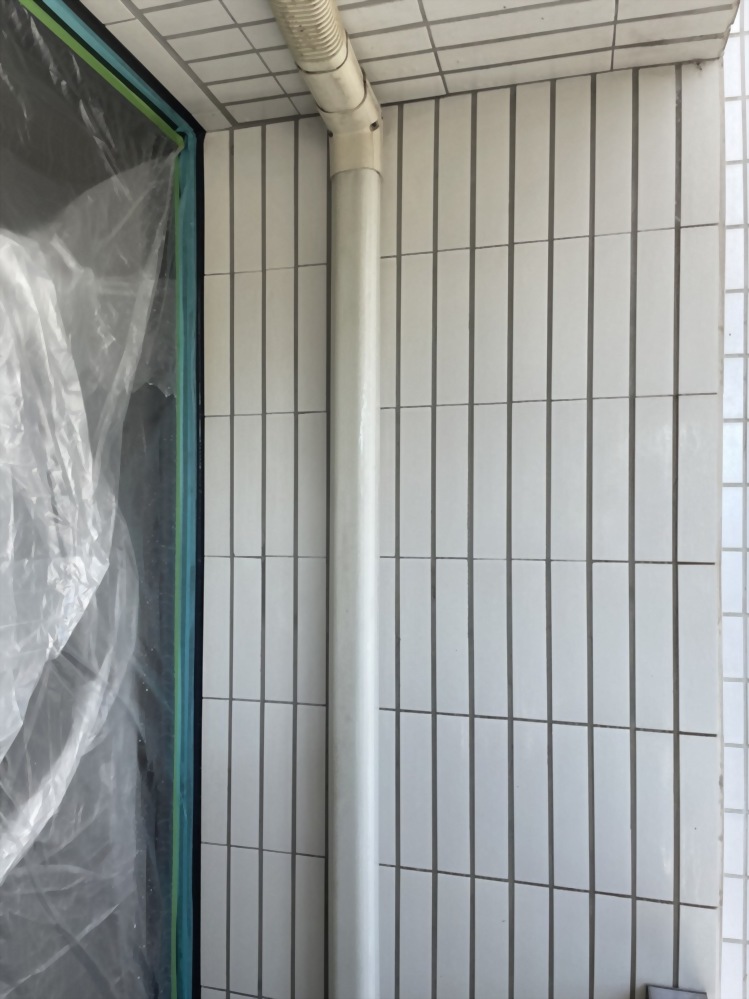
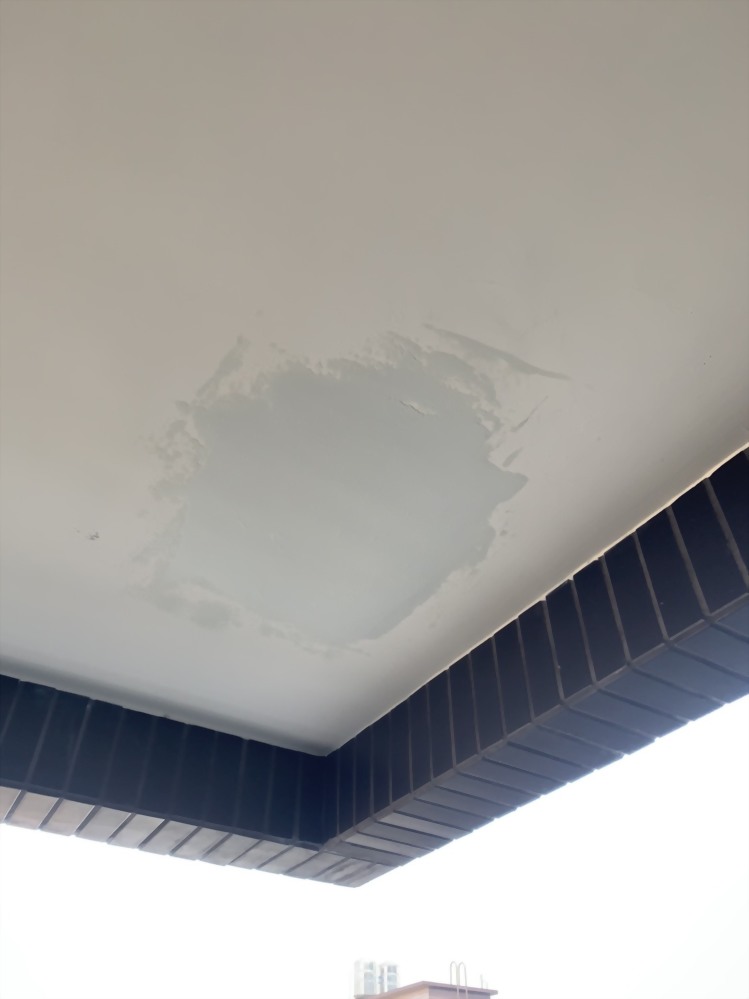
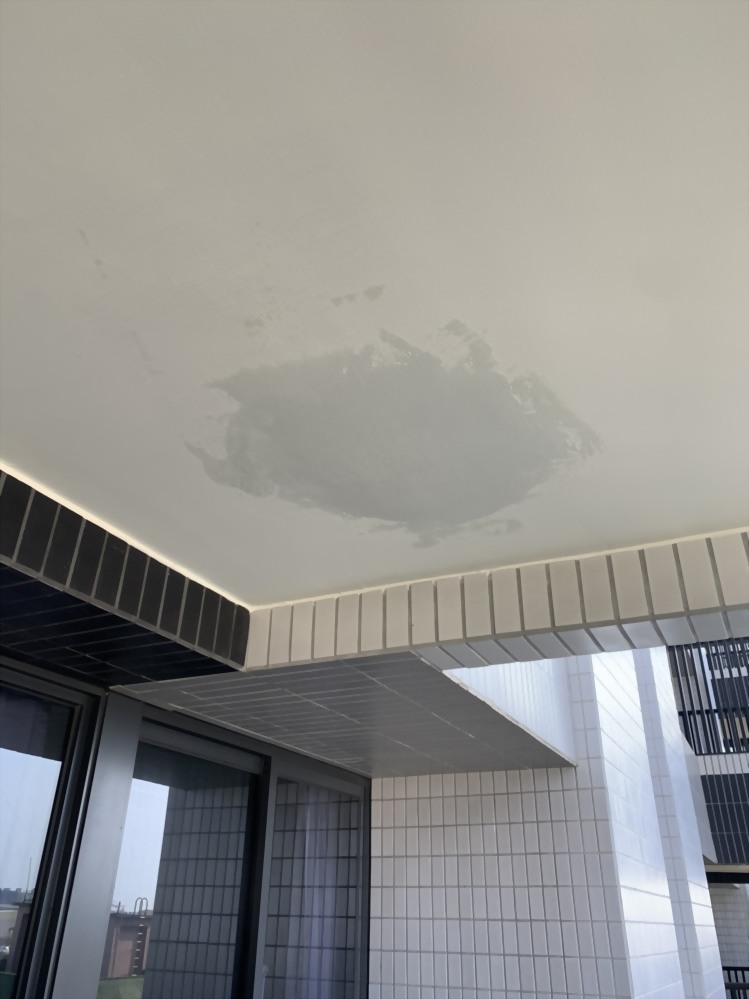
Water-Based EVA Elastic Waterproof Coating | Match Your Problem First
Get the waterproofing wrong once, and every rainstorm becomes a stress test. Water-based German-formula EVA elastic membrane — ultra-high elasticity, thick-coat without sagging, crack-following capability, salt and UV resistant. Exterior walls, roofs, balconies, corners — one system covers everything.
Match Your Problem First
|
What You're Seeing |
What It Means |
What Needs to Be Done |
|
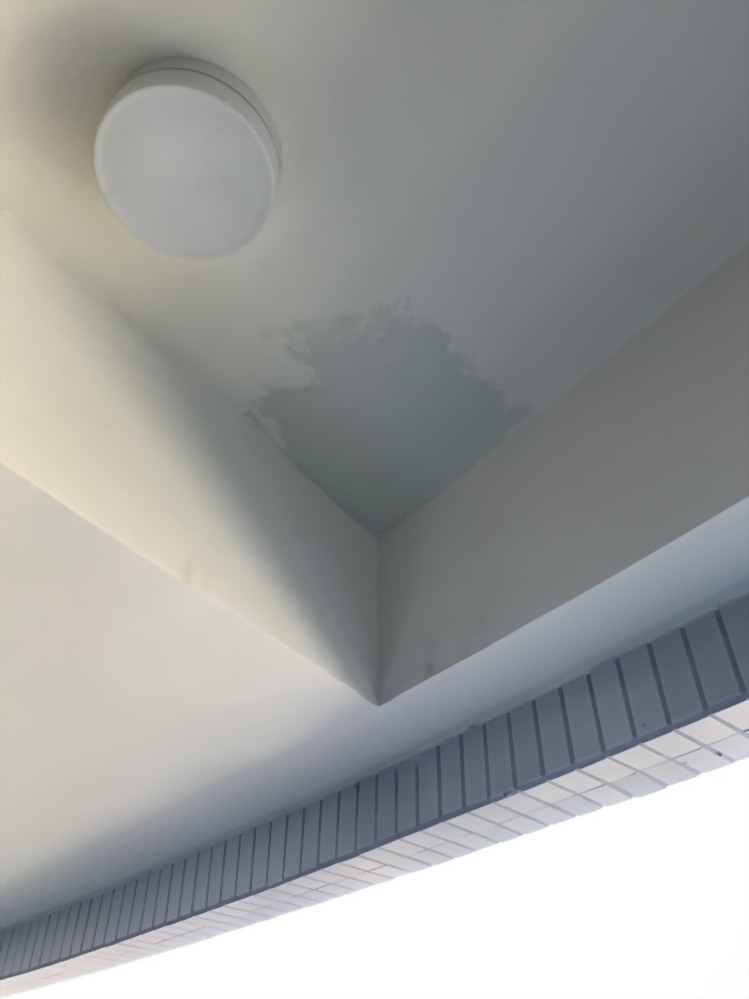
Indoor leaking after rain |
Waterproof layer aged or joint detail failed |
Joint reinforcement + full membrane rebuild |
|
Old membrane bubbling / cracking |
Substrate moisture or UV degradation |
Full renewal or add reflective topcoat |
|
Water seeping near gutters or drains |
Poor edge sealing or missing reinforcement strip |
Reinforcement fabric layer + contoured drainage sealing |
|
Leaking at inside corners or pipe penetrations |
Joint areas not reinforced with fabric |
Polyester non-woven / fiberglass tape reinforcement |
|
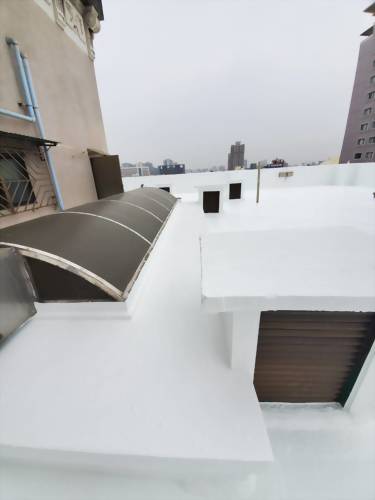
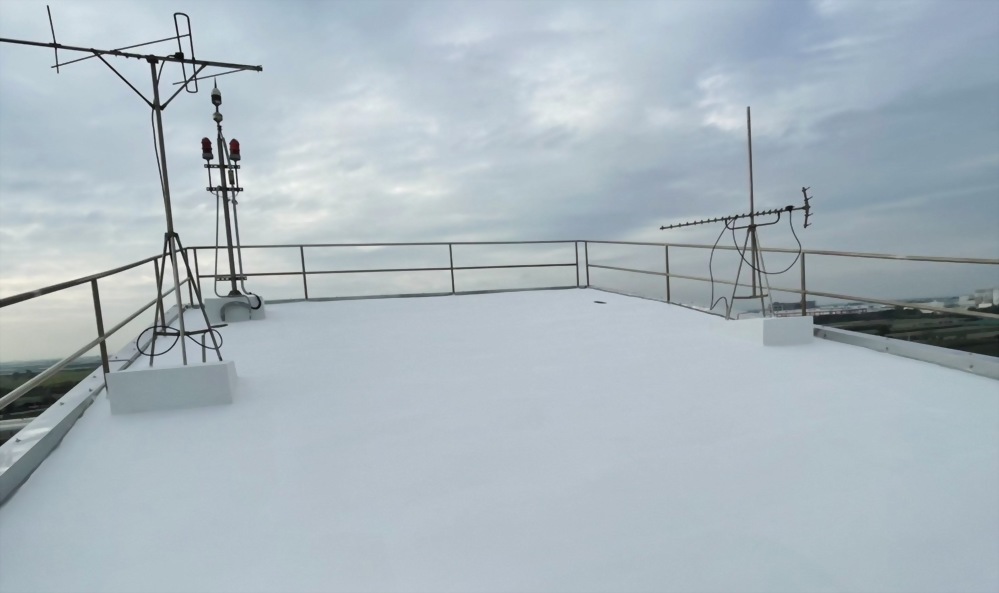
Top-floor rooms extremely hot in summer |
Black roof absorbing large amounts of heat |
Apply white high-reflectance weatherproof topcoat |
|
Exterior wall cracking / powdering with seepage |
Coating film has failed |
EVA membrane + fiberglass mesh reinforcement |
4 Things to Confirm Before Work Begins
Skip any one of these and problems will reappear after completion.
- Moisture content — Must be ≤ 8–12%. Exceeding this causes immediate bubbling and delamination. Allow sufficient drying time after rain before work begins.
- Substrate type — RC concrete, metal, and old asphalt each require a different primer. They are not interchangeable.
- Joint locations — Inside corners, pipe penetrations, floor drains, and expansion joints are the source of 90% of all leaks. Each must be individually reinforced.
- Where it should not be used — Long-term ponding areas, swimming pool or water tank interiors, oily or powdering surfaces that haven't been cleaned. EVA membrane is not suitable for these — a different system is required.
Core Performance Specifications
|
Performance Item |
Specification |
|
Elongation rate |
200%–600% (depending on product grade) — absorbs wall crack displacement |
|
Tensile strength |
1.5–3.0 MPa — higher than standard acrylic coatings |
|
Thick-coat capability |
Single coat 1–2 mm without sagging — suitable for vertical surfaces and roofs |
|
Water impermeability |
0.3 MPa / 30–60 minutes without penetration |
|
Weatherability |
500–1,500 hours UV test without powdering |
|
Alkali resistance |
Withstands strong alkali from RC substrate (pH 12–13) |
|
Heat resistance |
Does not soften or melt under southern Taiwan's intense sun exposure |
|
Water resistance |
No whitening or delamination under long-term immersion |
Standard 5-Step Construction Process
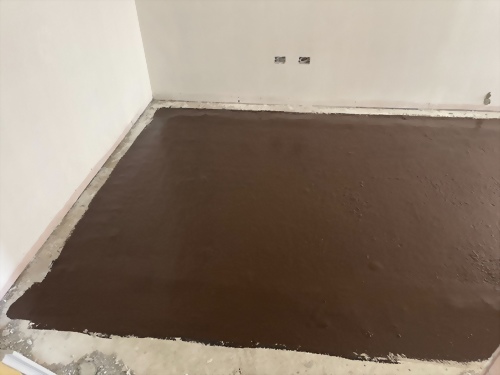
STEP 1 | Substrate Cleaning and Preparation High-pressure cleaning → remove loose coating → remove old silicone → V-groove crack cutting + resin fill → inside corners shaped to radius (R angle)
STEP 2 | Primer (Selected by Substrate Type)
|
Substrate Type |
Required Primer |
|
Cement / mortar surface |
Modified acrylic cement-type bonding agent |
|
Tile surface |
Tile-type adhesion primer |
|
Metal surface |
Metal-specific anti-rust primer |
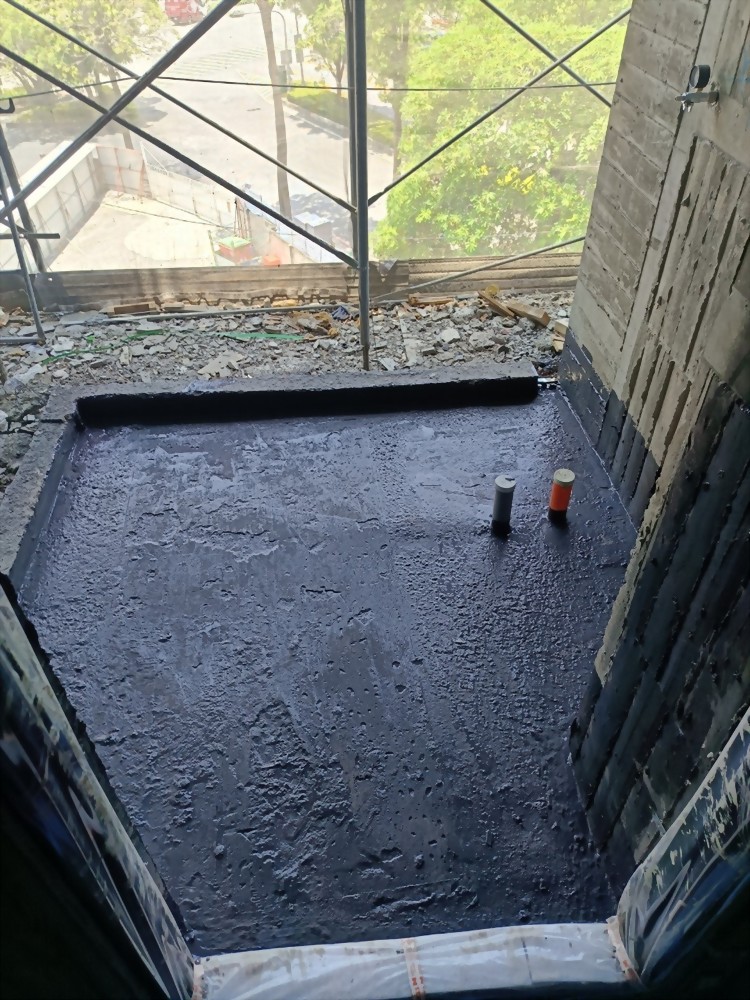
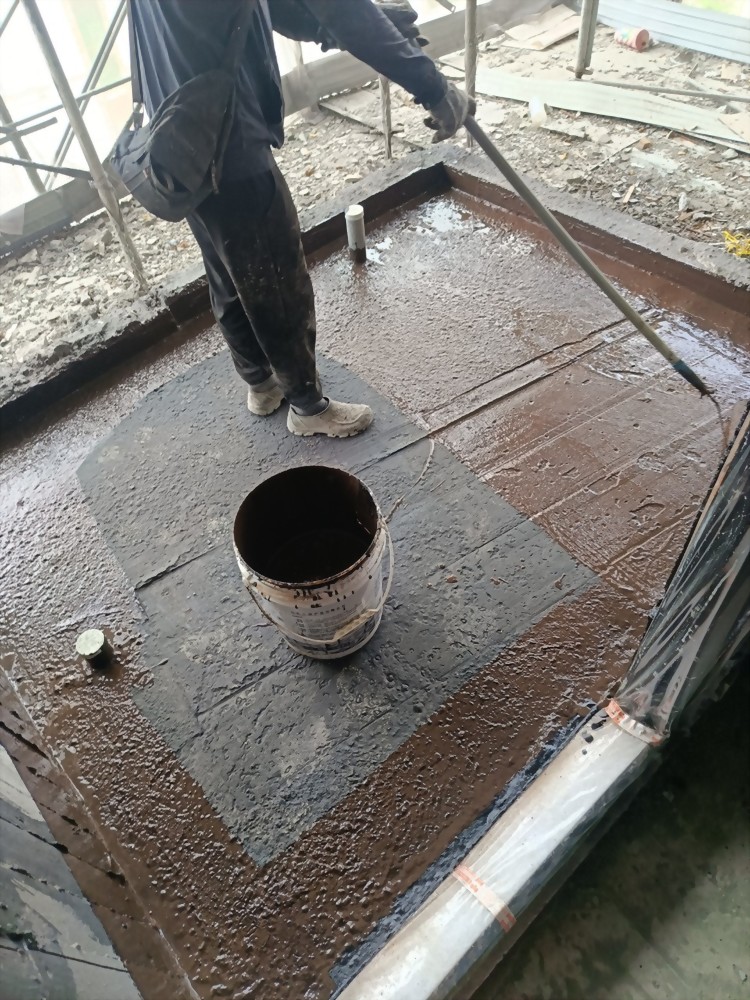
STEP 3 | Reinforcement Fabric Layer (Recommended) Non-woven polyester or fiberglass cloth. Applied at: inside corners, crack zones, parapet walls, roof protrusions, and floor drain surrounds.
STEP 4 | Main EVA Membrane Application
|
Protection Level |
Number of Coats |
Dry Film Thickness |
|
Standard roof / exterior wall |
2–3 coats |
1.0–1.5 mm |
|
Heavy-duty (gutters, parapet walls) |
3–4 coats |
1.5–2.0 mm |
Key technique: first coat horizontal, second coat vertical — applied in crossing directions. Allow surface to dry (approx. 1–3 hours, touch-dry) between coats.
STEP 5 | Weatherproof Topcoat (Strongly Recommended) Exterior walls: elastic topcoat or mineral paint. Roofs: white reflective weatherproof coating — reduces surface temperature by 10–20°C and significantly extends service life.
6 Common Failures — Almost All Preventable
|
Failure |
Cause |
Prevention |
|
Bubbling / delamination |
Substrate moisture content too high |
Measure before work — only proceed when dry |
|
Blistering after sun exposure |
Single thick coat — surface dry, interior wet |
Multiple thin coats, confirm drying between each |
|
Joint leaks recurring |
Inside corners and pipe penetrations not reinforced |
Non-woven or fiberglass fabric layer — mandatory |
|
Metal surface delaminating quickly |
Applied over undegreased or rusted metal |
Grind to bare metal sheen + metal-specific primer |
|
Membrane degrading early |
Direct intense UV exposure |
Apply white reflective weatherproof topcoat |
|
Floor drain backflow leaking |
Poor edge sealing |
Reinforcement strip + contoured drainage detailing + metal cover strip |
Comparison with Other Waterproofing Systems
|
Material |
Crack Following |
Weatherability |
Thick-Coat |
Ponding Resistance |
Best For |
|
EVA elastic membrane (this product) |
Excellent |
High |
Excellent |
Medium |
Exterior walls / roofs |
|
Acrylic waterproof coating |
High |
Medium |
Medium |
Low |
Exterior walls |
|
PU waterproof coating |
High |
Medium |
Medium |
Medium |
Roofs |
|
SBS / APP modified bitumen sheet |
Low |
Medium |
Low |
Excellent |
Requires flame installation |
|
Polyurea |
Excellent |
Excellent |
Medium |
Excellent |
High-end applications |
EVA elastic membrane delivers the best cost-performance ratio for exterior walls and roofs — high elasticity, thick-coat application, seamless coverage, safe to apply. For severe ponding or high-end requirements, consider polyurea or modified bitumen sheet.
Check These 5 Points Before Final Sign-Off
- Dry film thickness — Standard waterproofing ≥ 1.0–1.5 mm; heavy-duty recommended 1.5–2.0 mm
- Visual inspection — No whitening, no bubbles, no pinholes, uniform overlaps throughout
- Adhesion — Cross-cut test (ASTM D3359) grade 0–1
- Water-spray test — 30–60 minutes continuous spray, with focused checks at gutters and floor drains, no leakage
- Joint photo documentation — Reinforcement fabric, inside corners, pipe penetrations, parapet wall edge capping, and drain collar details must all have construction records
Pricing Reference
|
Work Item |
Reference Price |
|
Standard waterproofing (2–3 coats EVA membrane) |
Approx. NT$ 800–1,800 / ping |
|
Heavy-duty level (3–4 coats + reinforcement fabric) |
Approx. NT$ 1,500–2,800 / ping |
|
White reflective weatherproof topcoat (add-on) |
Approx. NT$ 300–600 / ping |
|
Joint repair (gutters, pipe penetrations, corners) |
Priced per location — quoted separately |
|
Metal surface rust removal and primer surcharge |
Based on corrosion severity — quoted separately |
Actual quotes vary based on project area, joint complexity, substrate condition, and building height.
Copy & Send This to Any Contractor When Requesting a Quote
I need a water-based EVA elastic waterproof membrane system. Please provide:
- Product data sheet: EVA content, solid content, elongation rate, tensile strength, water impermeability data
- Recommended dry film thickness and number of coats (standard areas / gutters / joints — listed separately)
- Primer recommendations (cement / metal / tile — each matched separately) + reflective topcoat recommendation
- Construction SOP: inter-coat intervals, temperature/humidity limits, post-rain waiting time
- Reinforcement fabric specs: weight per m², width, overlap method
- Itemized quote: substrate preparation / primer / membrane / fabric / topcoat / edge sealing / debris removal
- Warranty terms: water leakage / adhesion / powdering — years covered for each
- Kaohsiung-area project references (coastal / high-UV environments) with photos
When requesting a quote, please provide first: project area, substrate type (RC / metal / old asphalt), current problems (leaking / cracking / heat), and whether the location is coastal or severely west-facing.